
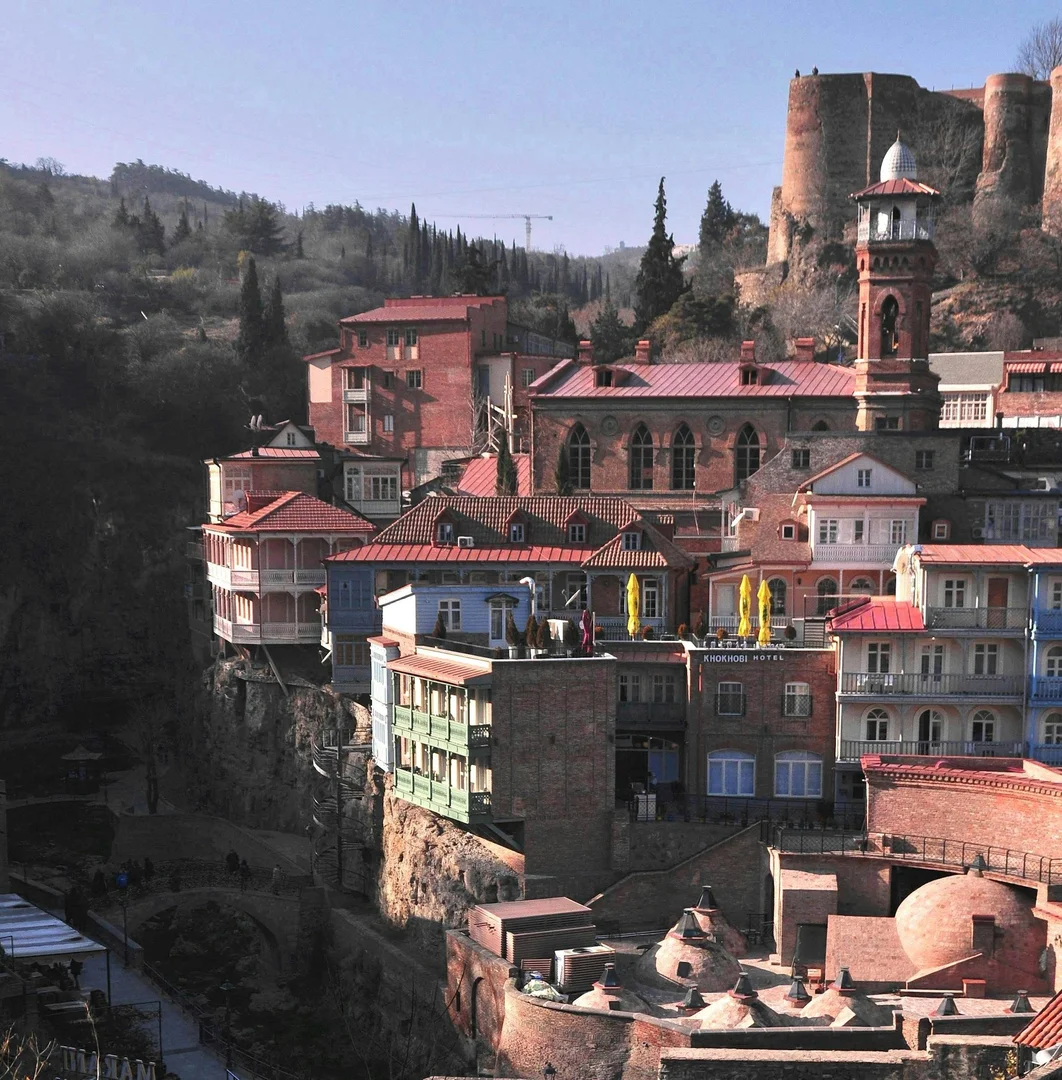
Ask five expats about the best districts to live in Tbilisi and you get five answers, all describing the same three streets. The listings make it worse: they use neighbourhood names that appear on no official map, so you cannot compare like with like. Here is the city as City Hall divides it, what each area costs you in noise, commute and heating, and how to check a specific address before you sign anything.
How Tbilisi is actually divided
Tbilisi runs on ten district administrations: Vake, Saburtalo, Mtatsminda, Krtsanisi, Chugureti, Didube, Nadzaladevi, Gldani, Isani and Samgori. Each has its own gamgeoba page on the Tbilisi City Hall site.
Almost nobody uses those ten names in conversation. Agents, landlords and expat groups run on neighbourhood names instead, and most of the popular ones are not administrative units at all. The gap costs you twice: you compare a Vera price against a Mtatsminda price without noticing they are the same district, and when you register a legal address or pull a property extract, the paperwork uses the official district while the listing name appears nowhere.
| Name in the listing | Official district it sits in |
|---|---|
| Vera | Mtatsminda |
| Sololaki | Mtatsminda |
| Marjanishvili | Chugureti |
| Avlabari | Isani |
| Nutsubidze Plateau, Bagebi | Saburtalo |
| Didi Dighomi | Didube |
| Ortachala | Krtsanisi |
| Varketili | Samgori |
District names get stretched upward in listings. A flat advertised as Vake is regularly on the Saburtalo side of the boundary at a Vake price. Ask for the street and building number before you discuss money.
The shortlist, compared
Nine areas cover almost every realistic choice. Rent is graded relatively rather than in dollars, because asking rents move fast and the honest source for actual numbers is the by-district data in the National Statistics Office residential property price index, updated quarterly.
| Area | Who it suits | Metro on the doorstep | Rent level | The trade-off |
|---|---|---|---|---|
| Vake | Families and higher budgets | No | Highest | Traffic and parking |
| Vera | Car-free professionals | No | High | Small flats, older buildings |
| Sololaki | Character over comfort | No | High | Stairs, noise, maintenance |
| Mtatsminda slopes | Quiet and central | Near Rustaveli | High | Steep walks, poor parking |
| Saburtalo | Best value with modern stock | Yes, Line 2 | Middle | Little atmosphere |
| Chugureti / Marjanishvili | Central on a budget | Yes, Line 1 | Middle | Street quality varies block to block |
| Avlabari | Central, cheaper, walkable | Yes, Line 1 | Lower middle | Fewer international services |
| Didi Dighomi | Space and parking | No | Lower middle | You will need a car |
| Isani, Samgori, Gldani, Nadzaladevi | Lowest rents in the city | Yes, Line 1 | Lowest | Soviet stock, less English |
Vake
The default answer, and often the right one. Vake Park, the embassies, the international schools and the densest cluster of English-speaking services sit here, and rents reflect all of it.
The catch is the road network. Vake was not built for the number of cars now parked in it, and a flat two streets from Chavchavadze Avenue still means a twenty-minute crawl to get anywhere at 9am.
Vera
The best walkable pocket in the city if you do not own a car: specialty coffee, independent shops and a short flat walk to Rustaveli, all inside Mtatsminda district. Stock is the constraint. Buildings are older, flats are smaller, and the quiet courtyard-facing ones get taken fast.
Saburtalo
The value district, and where the largest share of long-stay foreigners actually end up. It has the second metro line, the big supermarkets, most of the clinics and a steady supply of newer buildings with lifts that work.
Saburtalo is long. Living near Delisi is a different city from living near Vazha-Pshavela, so treat the metro station, not the district name, as the unit of comparison.
Sololaki
Beautiful, and harder to live in than it looks. Carved balconies and courtyard buildings come with stairwells nobody maintains, weak water pressure upstairs and the occasional roof problem. It is also the epicentre of short-term letting, so expect a rotating cast of neighbours with suitcases.
Mtatsminda slopes
Above Rustaveli the streets go quiet fast, which suits people who want the centre without the traffic. Parking is close to impossible and delivery drivers hate the gradient. Both facts are priced in.
Chugureti and Marjanishvili
The left bank equivalent of Vera, at a discount: Marjanishvili metro, Agmashenebeli Avenue and a decent run of restaurants. Quality varies sharply within a few hundred metres, so walk the exact street rather than the area.
Avlabari
Central, on the metro, cheaper than anything across the river, and a real neighbourhood rather than a strip of cafes. The trade is fewer English-language services and a shorter list of gyms and coworking spaces.
Didi Dighomi
Space, newer buildings, parking that exists and rents well below the centre. It works for families with a car and remote workers with no fixed office hours, and badly for anyone commuting daily.
The value belt: Isani, Samgori, Gldani, Nadzaladevi
This is where most of Tbilisi lives: Soviet-era blocks, Line 1 metro coverage, the lowest rents in the city. The stock is the issue rather than the location, and lifts, plumbing and window sealing decide whether a flat is a bargain or a winter of problems.
Transport is narrower than the map suggests
Tbilisi has two metro lines and one interchange between them, at Station Square. Line 1 runs the long diagonal from Akhmeteli to Varketili, and Line 2 serves Saburtalo.
Read that against the shortlist and the pattern is obvious: Vake, Vera and Sololaki, the three areas expats want most, have no metro station. Walk your actual commute at 9am on a weekday before you sign, not at 2pm on a Sunday when you view the flat.
Three official maps we check before recommending a street
Most guides to the best districts to live in Tbilisi stop at atmosphere. These are the checks that change a decision, and all three are free.
The cadastral map
The National Agency of Public Registry publishes a public map at maps.gov.ge where any parcel can be looked up by its cadastral code. Use it to see what sits beside your building: an empty registered plot next to a quiet courtyard is a future construction site.
Pair that with a proper extract on the flat itself. Our property due diligence checklist covers what the extract should and should not show.
City Hall's construction map
Tbilisi City Hall runs its own public map portal at maps.tbilisi.gov.ge, which carries municipal inspection data including construction sites and their status. Checking it takes two minutes and answers the question nobody asks at a viewing: what is going up next door, and when.
A large share of premium rent in Vake, Vera and Dighomi is paid for light, quiet and a view. All three can disappear inside a year when the plot next door is built out, and a signed twelve-month lease does not shrink because your window now faces scaffolding. Check the neighbouring plots before you pay a deposit, not after.
The air quality portal
Tbilisi sits in a valley and air quality is not uniform across it. The National Environment Agency publishes live monitoring data on the government air quality portal, station by station across the city.
Traffic corridors read worse than residential side streets a few hundred metres away, and winter readings run higher than summer ones. If anyone in the household has asthma, watch the nearest station for a few weeks rather than trusting a single afternoon.
The building decides more than the district
A good flat in an average district beats an average flat in a good district. Four things separate the two.
Heating. Central gas with a working boiler is cheap to run. Electric heaters in a poorly sealed Soviet block are not, and January bills catch people out.
Water. Upper floors in older buildings can have weak pressure and unreliable hot water. Run every tap at the viewing.
The lift and the stairwell. Both are shared responsibility, and a neglected stairwell tells you how the building association actually functions.
Orientation. South-facing flats in Vake and Vera get genuinely hot in July. North-facing ones stay cold through February.
A flat viewed in May tells you nothing about heating, damp or draughts. If you are arriving in warm weather, ask the landlord directly what the highest gas and electricity bills were last winter, and ask for the receipts.
We research the real estate agencies working in Tbilisi and rank the ones worth paying. Independently researched, re-checked quarterly, free to read.
See the ranked list
Renting and buying point at different districts
Renting rewards flexibility. Take twelve months in Saburtalo or Avlabari, learn the city, then move once you know which streets you actually use. Our guide to renting long term in Tbilisi covers deposits, seasonality and what a Georgian lease should say.
Buying rewards liquidity. Vake, Vera and Saburtalo resell fastest because demand there is deepest, which matters more than a slightly better price per square metre somewhere thinner. The mechanics sit in our guide to buying an apartment as a foreigner.
Either way, the search goes faster with someone who works these streets daily. Our ranked list of real estate agencies in Tbilisi shows who handles foreign clients properly, and the rental agents in Tbilisi list is the narrower one for leases. On a purchase, put a real estate lawyer in Tbilisi on the contract before any money moves, then hand the last step to the moving companies in Tbilisi that handle fifth-floor walk-ups without breaking anything.
Key takeaways
- Tbilisi has ten official districts, but listings run on neighbourhood names, so always compare by street and building number.
- Vake buys prestige and services, Vera buys walkability, Saburtalo buys value and metro access, and the left bank buys space.
- Only two metro lines exist, and Vake, Vera and Sololaki are not on either of them.
- The cadastral map, City Hall's construction map and the government air quality portal are free and answer questions no viewing will.
- Heating, water pressure, the lift and window orientation decide whether a flat is comfortable, more than the district name does.
- Rent first, buy later, and buy where resale demand is deepest rather than where the price per square metre looks cleverest.
FAQ
What is the best district to live in Tbilisi for expats?
Saburtalo suits most people arriving for a first year: metro access, modern buildings, clinics and the lowest friction per lari. Vake is better if budget is not the constraint and you want international schools nearby, and Vera wins for anyone living without a car. The street matters more than the district.
How many districts does Tbilisi have?
Ten, each with its own administration under Tbilisi City Hall: Vake, Saburtalo, Mtatsminda, Krtsanisi, Chugureti, Didube, Nadzaladevi, Gldani, Isani and Samgori. Names like Vera, Sololaki, Avlabari and Marjanishvili are neighbourhoods inside those districts, not districts themselves, and official paperwork uses the district.
Is Vake worth the extra rent?
It is if you need international schools, embassy proximity, or the largest pool of English-speaking services within walking distance. It is not if you work from home and rarely leave your own few streets, because Vera and Saburtalo deliver most of the daily experience for less. The premium buys convenience, not better housing stock.
Which Tbilisi districts have a metro station?
Line 1 covers Gldani, Nadzaladevi, Didube, Chugureti, Isani and Samgori. Line 2 runs through Saburtalo. Vake, most of Mtatsminda including Vera and Sololaki, and Didi Dighomi have no station, so plan around buses, walking or a car if you live there.
Where do most foreigners live in Tbilisi?
Vake, Saburtalo and Vera carry the largest concentrations, with Saburtalo taking the biggest share of longer-stay residents on price-to-quality grounds. Sololaki and the Old Town skew towards shorter stays and short-term lets, and Didi Dighomi picks up families who want space and parking.
What is the cheapest district to live in Tbilisi?
Gldani, Nadzaladevi, Samgori and parts of Isani carry the lowest rents in the city, with Didi Dighomi close behind. Most stock is Soviet-era, so the condition of the specific building matters more than the headline price. Line 1 coverage makes several of these genuinely commutable.
Is Sololaki a good place to live long term?
It is the most atmospheric part of the city and the most demanding to live in. Old buildings mean unmaintained stairwells, variable water pressure and repair costs that fall on residents. It works for a year of character and less well as a long-term base with young children.
Which district is best for families with children?
Vake for proximity to international schools and parks, Saburtalo for value and clinics, Didi Dighomi for space and parking if you have a car. Drive the actual school run at rush hour before deciding, because Tbilisi traffic makes short distances long. Lower floors are worth prioritising where the lift is unreliable.
How much does rent vary between Tbilisi districts?
Enough that the same budget buys a small central flat or a large outer one. Size it against the National Statistics Office property price data for Tbilisi by district, republished quarterly, rather than a figure quoted in a blog post. Asking rents also swing seasonally, with autumn the tightest period and midwinter the most negotiable.
Is air quality a real problem in Tbilisi?
It varies by location and season rather than being uniformly bad. The National Environment Agency publishes live station-level readings on its air quality portal, and traffic corridors read worse than residential streets a few hundred metres away. Check the station nearest a shortlisted address rather than a city-wide average.
Should I rent in a Soviet block or a new build?
New builds usually win on lifts, insulation and parking; Soviet blocks win on ceiling height, room size, location and price. The deciding factor is maintenance rather than age, so inspect the stairwell, the lift and the water pressure in both cases. A well-run 1970s building beats a badly finished new one most of the time.